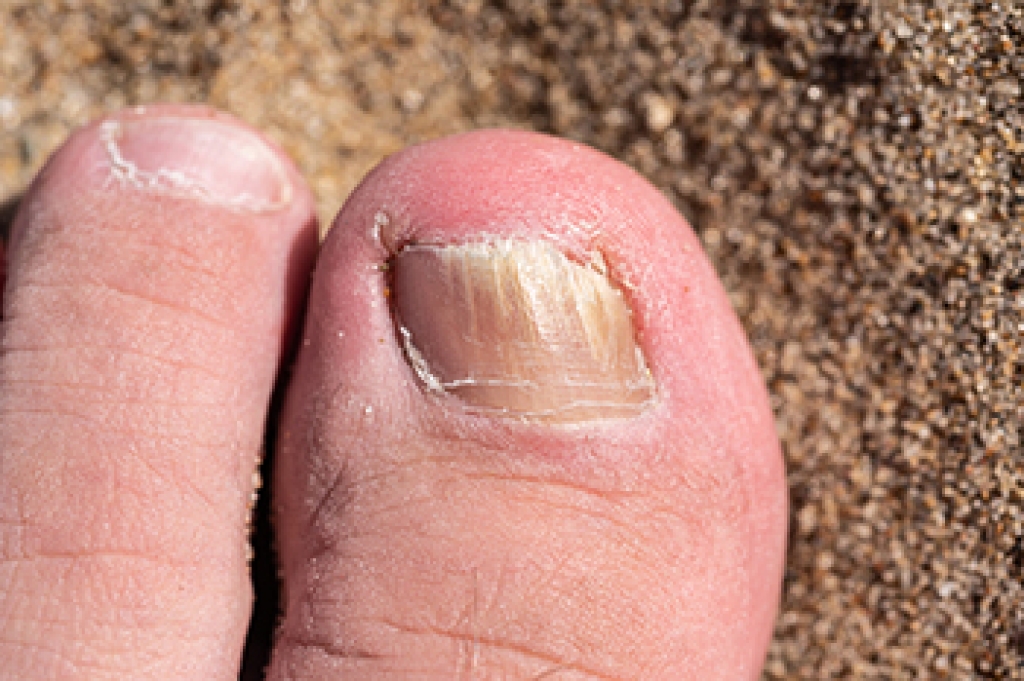
Toenail fungus develops when fungi enter a nail through a crack or the surrounding skin. The infection can affect one toenail or spread to several nails. Early signs include white or yellow discoloration, thickening, and a brittle edge. The nail can develop ridges or begin to crumble. As the infection progresses, debris can collect beneath the nail, and the nail may lift from the nail bed. Some patients develop tenderness or pain when shoes press against a thickened nail. Toenail fungus is more than a cosmetic concern because discomfort can interfere with standing, exercise, and daily activities.
The infection is more likely to develop in feet that remain warm and damp. Risk also increases with repeated nail injuries, heavy sweating, or exposure in shared changing areas. Older adults and athletes can be more vulnerable. Diabetes, poor circulation, and a weakened immune system can also raise the risk. However, not every thick or discolored nail has a fungal infection. An injury, psoriasis, or another nail disorder can produce a similar appearance. A podiatrist may examine the nail and collect a clipping or scraping for testing. Confirming the cause prevents patients from spending time on treatment that is not suited to the problem.
A podiatrist can determine how much of the nail is affected and whether the surrounding skin is involved. Treatment depends on the number of infected nails, the depth of infection, and the patient’s health. The podiatrist can reduce nail thickness, remove loose areas, and monitor the new nail as it grows. Professional trimming can reduce pressure inside shoes and make walking more comfortable. Because toenails grow slowly, visible improvement can take several months even when treatment is working. Follow-up visits help the podiatrist check progress and look for signs that the infection may have returned. If you have developed toenail fungus, it is suggested that you schedule an appointment with a podiatrist for a diagnosis and appropriate treatment.
If left untreated, toenail fungus may spread to other toenails, skin, or even fingernails. If you suspect you have toenail fungus it is important to seek treatment right away. For more information about treatment, contact Raul Hidalgo DPM of South Texas Foot & Ankle Care. Our doctor can provide the care you need to keep you pain-free and on your feet.
Symptoms
- Warped or oddly shaped nails
- Yellowish nails
- Loose/separated nail
- Buildup of bits and pieces of nail fragments under the nail
- Brittle, broken, thickened nail
Treatment
If self-care strategies and over-the-counter medications does not help your fungus, your podiatrist may give you a prescription drug instead. Even if you find relief from your toenail fungus symptoms, you may experience a repeat infection in the future.
Prevention
In order to prevent getting toenail fungus in the future, you should always make sure to wash your feet with soap and water. After washing, it is important to dry your feet thoroughly especially in between the toes. When trimming your toenails, be sure to trim straight across instead of in a rounded shape. It is crucial not to cover up discolored nails with nail polish because that will prevent your nail from being able to “breathe”.
In some cases, surgical procedure may be needed to remove the toenail fungus. Consult with your podiatrist about the best treatment options for your case of toenail fungus.
If you have any questions please contact our office located in San Antonio, TX . We offer the newest diagnostic and treatment technologies for all your foot and ankle needs.